

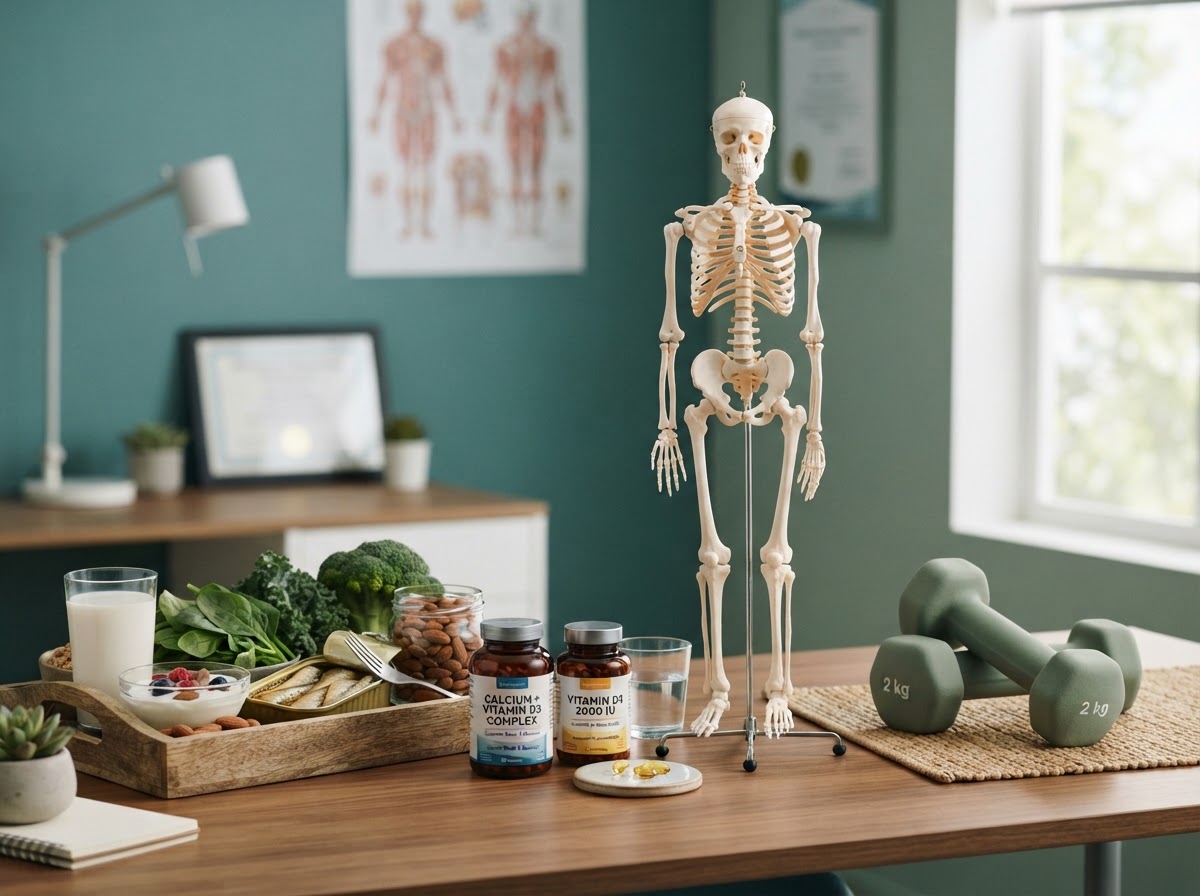
Calcium, Magnesium, and Vitamin D: A Practical Guide to Bone Health
Calcium, magnesium, and vitamin D are often discussed together because they work as a team: vitamin D helps you absorb calcium, magnesium supports bone structure and muscle function, and calcium provides the mineral backbone of bone. Getting the balance right matters more than taking high doses of any single one.
How These Nutrients Work Together
- Vitamin D: Increases calcium absorption from the gut.
- Calcium: The primary mineral in bone; also supports muscle and nerve function.
- Magnesium: Helps activate vitamin D and supports bone mineralization and muscle relaxation.
Food First, Supplements Second
Dairy, leafy greens, fortified foods, nuts, seeds, and fish provide many of these nutrients. Supplements are best used to fill gaps that remain after you account for dietary intake — not to replace food entirely.
Common Mistakes
- Taking high-dose calcium without vitamin D or magnesium
- Assuming more calcium always means stronger bones
- Self-treating osteoporosis risk without a bone-density evaluation
- Combining several calcium-containing products unknowingly
Who May Benefit From Supplementation
- Adults with low dietary calcium intake
- Those with limited sun exposure and low vitamin D levels
- Postmenopausal women, who face higher bone-loss risk
- Adults on medications that affect bone density
When to Seek Medical Care
Discuss bone-density screening based on your age and risk factors. Seek care for unexplained fractures, persistent bone pain, or significant muscle weakness. Supplements complement medical care — they don't replace it.
Frequently Asked Questions
Can I take calcium and vitamin D together?
Yes, they are often taken together, but doses should be appropriate and spaced if large amounts are involved.
Is it dangerous to take too much calcium?
Excess calcium, especially from supplements, can have risks. Total intake should stay within recommended ranges.
Which magnesium form is best for bones?
Different forms have different uses. Discuss your goals with your physician before choosing.
Do I need a bone-density scan?
That depends on age, sex, and risk factors. Your physician can advise on appropriate screening.
Bone health is a team effort among nutrients, activity, and medical guidance. Browse bone-health support or schedule a consultation with Phoenix Medical Spa PLLC.
This article is for general educational purposes only and does not constitute medical advice, diagnosis, or treatment. Dietary supplements are not intended to diagnose, treat, cure, or prevent any disease. Individual needs vary. Consult a qualified healthcare professional before starting any supplement or testing program. If you believe you are experiencing a medical emergency, call 911 or seek emergency care immediately.