

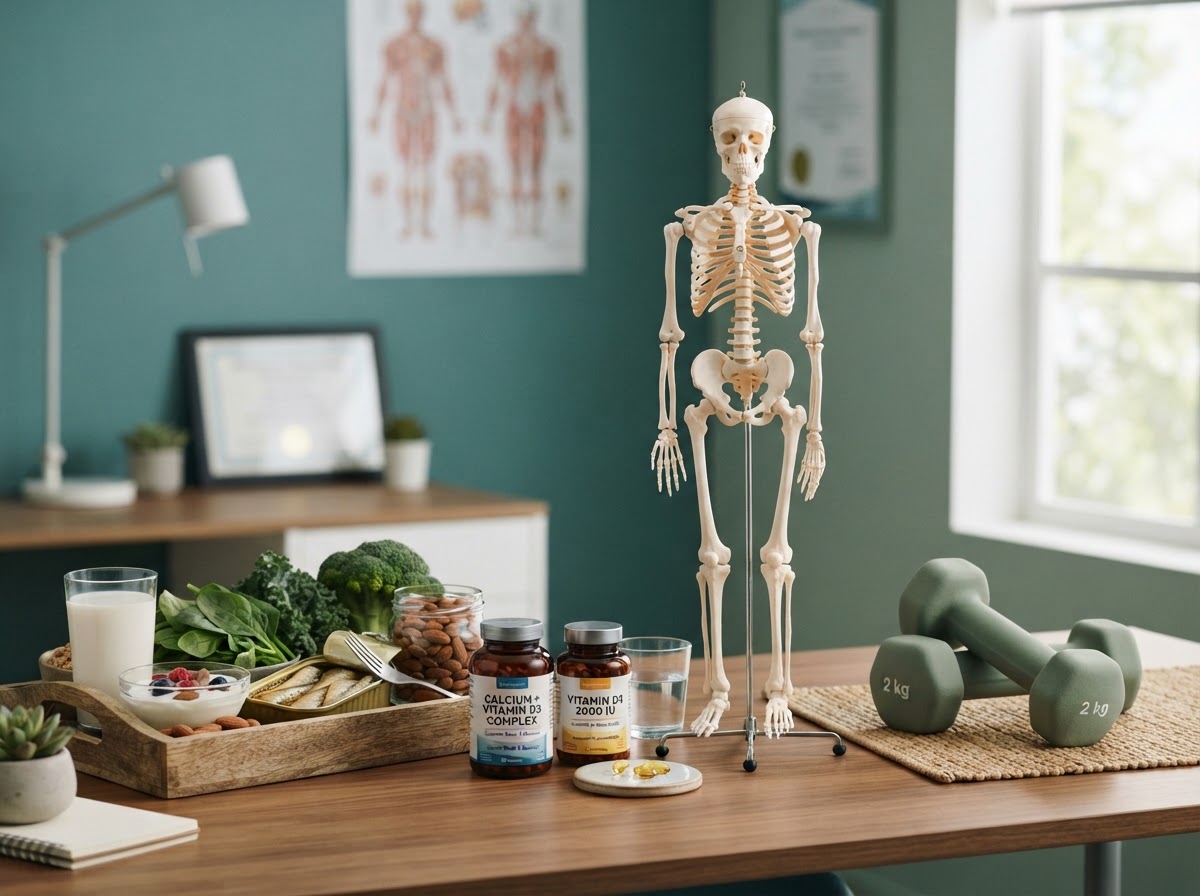
Bone & Muscle Health: Calcium, Vitamin D, Protein, and Beyond
Bone and muscle health may not seem urgent in midlife, but the habits you build now shape how you move, recover, and stay independent decades later. Muscle also plays a key role in metabolism — which is why preserving it matters during weight loss, too. Supplements can support this picture, but only as part of a plan that includes nutrition and movement.
Why Bone and Muscle Health Matter
- Bones: Peak bone mass is reached in early adulthood; after that, the goal is to slow loss.
- Muscle: Supports strength, mobility, balance, and metabolism.
- Together: They reduce fall and fracture risk and support long-term independence.
Key Supplements for Musculoskeletal Health
- Calcium: Best obtained from food when possible; supplementation should match your intake and needs.
- Vitamin D: Essential for calcium absorption; dosing is guided by lab results.
- Magnesium: Supports bone structure and muscle function.
- Protein: Foundational for muscle preservation, especially during weight loss or with aging.
- Vitamin K: Plays a role in bone health; usually adequate from a balanced diet.
What Supplements Cannot Replace
No supplement builds muscle or bone the way resistance training and weight-bearing activity do. Supplements support a foundation that exercise creates. Skipping activity while taking calcium and vitamin D misses the most important piece.
Special Considerations During Weight Loss
Weight loss — especially rapid loss — can reduce muscle along with fat. Adequate protein and resistance activity help preserve muscle. This is particularly important for adults over 40 and anyone on a GLP-1 medication. Discuss your protein target with your physician rather than self-prescribing.
When to Seek Medical Care
See a clinician for unexplained fractures, severe bone pain, significant weakness, or falls. If you have risk factors for osteoporosis, a bone-density evaluation may be appropriate. Supplements do not replace these assessments.
Frequently Asked Questions
Do I need a calcium supplement?
It depends on your dietary intake, age, and risk factors. Many adults get enough from food and may not need a supplement.
How much protein do I need for muscle preservation?
Needs vary based on weight, activity, age, and health goals. Your physician can help set an individualized target.
Can I build bone with supplements alone?
No. Weight-bearing exercise is essential. Supplements support — but don't replace — the stimulus your bones need.
Is collagen helpful for joints and bones?
Research is mixed. Some studies suggest modest benefit, but it should not replace protein, vitamin D, and exercise.
Strong bones and muscle come from movement, nutrition, and well-chosen support — not capsules alone. Browse bone and muscle health options or schedule a consultation with Phoenix Medical Spa PLLC.
This article is for general educational purposes only and does not constitute medical advice, diagnosis, or treatment. Dietary supplements are not intended to diagnose, treat, cure, or prevent any disease. Individual needs vary. Consult a qualified healthcare professional before starting any supplement or testing program. If you believe you are experiencing a medical emergency, call 911 or seek emergency care immediately.